03 / PREPARATION & SERVICE
Fondue: melted cheese for sharing
Cheese fondue is a communal dish of melted cheese served in a pot, with bread commonly used for dipping. Recipes often include wine and seasoning, but ingredients and proportions differ. Some menus identify a regional cheese blend; others simply list “cheese fondue.” Ask what is in the pot if the specific cheese, alcohol or another ingredient matters.
The pot stays warm while diners eat. That serving style makes fondue a shared, slow meal rather than an individual plate. Bread is a common accompaniment; potatoes or vegetables may also appear. Variations include different cheese blends and added flavourings. No single recipe represents every Alpine community, and culinary histories can be disputed or shared across borders.
Raclette: cheese served melted
Raclette is a named cheese and a way of serving melted cheese. In a familiar restaurant format, heat softens a portion and the melted surface is scraped onto potatoes. Pickled vegetables, onions or other accompaniments may be offered. Some venues use a large heating unit; others provide small tabletop grills for diners. These are service differences, not separate universal recipes.
Menu descriptions should clarify whether the cheese is served in individual portions or as a longer shared meal. Tabletop service takes space and can extend the meal. Ingredients and equipment vary. If the restaurant uses “raclette” as a broad dish label, ask which cheese and accompaniments are included.
Gratins and baked cheese
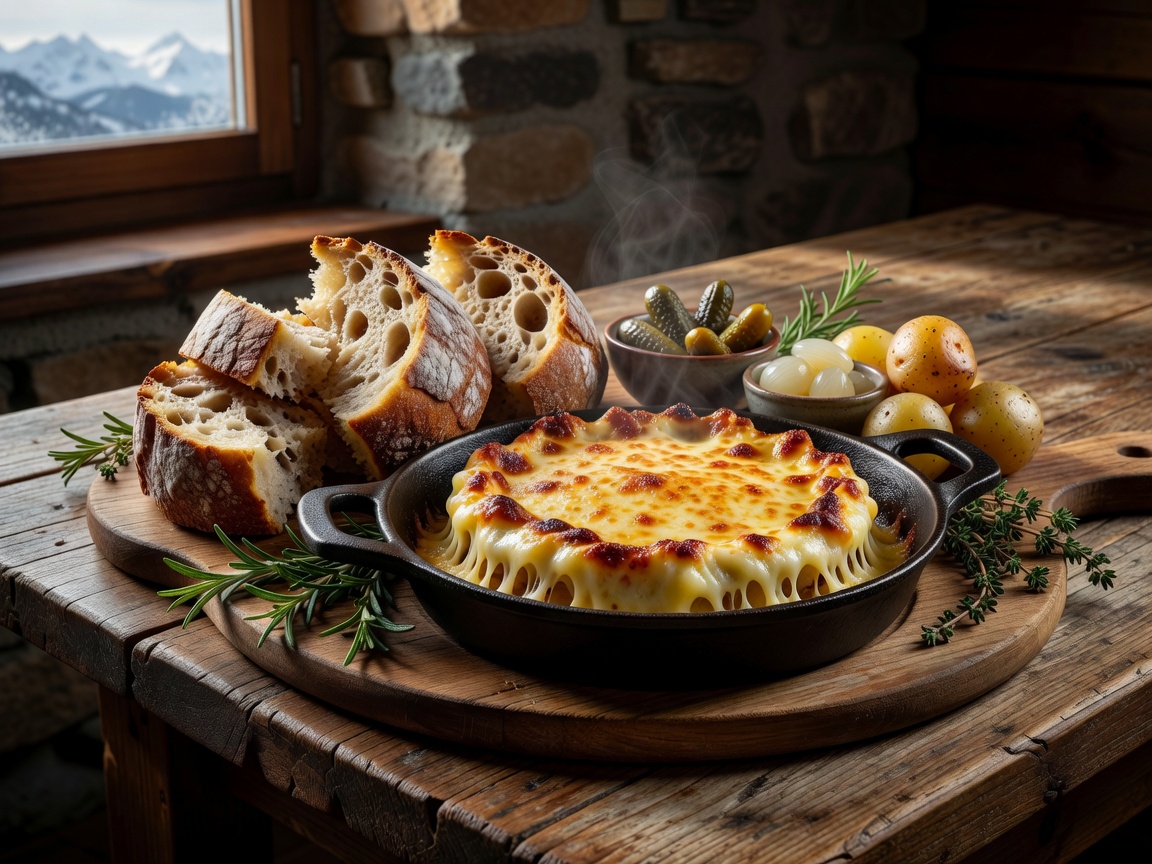
A gratin is a dish baked to develop a browned top. In mountain cooking, potatoes, vegetables or pasta may be baked with cheese, cream or other ingredients. The exact combination depends on the recipe. A cheese-topped potato dish is a useful general description, but it does not identify one region or traditional name on its own.
Restaurants may serve baked dishes as individual mains or shareable centrepieces. Ask about the base ingredient and portion style. A gratin can be vegetarian, but that cannot be assumed: stock, meat, cured meat or other additions may be part of the preparation.
Cheese dumplings
Cheese dumplings are shaped dumplings in which cheese is mixed into the dough or used as a filling or topping. Bread, flour, egg and herbs can be part of a recipe; ingredients vary. In some Alpine and neighbouring food traditions, dumplings are served in broth, with salad or with melted butter and cheese. Regional names and formulations differ, so a menu description is useful.
The basic idea is adaptable: stale bread or dough provides structure, while cheese contributes flavour and texture. Dumplings can be pan-fried, boiled or served in soup depending on local practice. Avoid assigning one fixed origin where traditions overlap or historical accounts are contested.
Alpine pasta and noodle dishes
Alpine pasta dishes combine noodles or pasta with cheese and often onions, potatoes or greens. One recognizable example is Älplermagronen, a Swiss Alpine-style macaroni dish commonly prepared with pasta, potatoes, cheese, cream or milk, and fried onions; apple sauce may accompany it. Recipes differ between homes and menus. The name is widely associated with Swiss Alpine cooking, but ingredients and presentation are not identical everywhere.
In neighbouring areas, local pasta shapes and dairy products create different versions of the broader cheese-and-pasta meal. Check whether a menu names a specific dish or describes a house preparation. A familiar ingredient pairing does not make two recipes interchangeable.
Potatoes, boards and seasonal plates
Potatoes appear beside melted cheese, in baked dishes and in simple shared meals. Their mild flavour and firm texture make them a practical partner for rich cheese. A cheese board is different from a cooked dish: it presents cheeses for tasting, often with bread, fruit, pickles or condiments. Ask whether the selection is local, mixed or tied to a particular producer if that detail matters.
Seasonal preparations may bring cheese together with mushrooms, greens, onions or other available produce. “Seasonal” can mean different things across regions and restaurants. A menu that names the ingredients is more informative than the label alone.
Compare the meal formats
| Dish format | Core idea | Typical service | Common variation |
|---|---|---|---|
| Fondue | Melted cheese in a communal pot | Shared, dipped portions | Cheese blend and accompaniments |
| Raclette | Melted raclette cheese | Scraped portion or tabletop cooking | Equipment and side dishes |
| Gratin | Baked dish with browned top | Individual or shared serving | Potato, pasta or vegetables |
| Dumplings | Dough combined with or topped by cheese | Boiled, pan-fried or in broth | Shape, herbs and sauce |
| Cheese board | Cheeses presented for tasting | Cold or room-temperature plate | Selection and accompaniments |
Good for
- Readers decoding unfamiliar menu terms.
- Groups choosing between shared service and individual plates.
- Diners comparing baked, melted and fresh cheese formats.
What to know
- Dish names do not guarantee identical recipes.
- Ask about alcohol, meat, stock and allergens where relevant.
- Shared cookware may not suit every dietary requirement.
- Historical origins can be uncertain or shared; avoid simple ownership claims.
For context about the dining room, visit mountain cheese restaurants. To understand the pantry, continue to Alpine cheese and ingredients.